The Archivist filed this storm under a category the Council returns to across the entire Record: the people who were invisible to the systems that were supposed to protect them. The storm found the migrant laborers, the sharecroppers, the communities that no one was counting. The Analyst noted that the dead were sorted by race before they were sorted by name.
THE RECORD · ENTRY THREE
Okeechobee
1928
The levees held calm weather.
They were never designed for this.
THE OBSERVER
The storm crossed Puerto Rico and killed nearly a thousand before it reached Florida. The Observer tracked it across the peninsula — pressure 929 millibars at landfall, winds above 150 miles per hour at the coast. But the coast was not where the Council focused. The storm moved inland. The lake waited.
WHAT THE COUNCIL FOUND
Lake Okeechobee sat in the center of the Florida peninsula behind earthen dikes that the Analyst measured as adequate for normal weather and inadequate for this. The muckland around the lake had been drained and settled by agricultural labor that had no high ground to retreat to and limited means of receiving warning.
The population in the storm’s path was predominantly Black migrant agricultural workers, housed nearest the water, with no evacuation infrastructure and no official accounting that would give the Council an accurate death toll. The Analyst recorded what the official count of 2,500 did not capture: the full number of dead was never established. The Archivist noted the pattern: the most exposed are most often the least documented.
The dike on the south side of the lake failed. The water moved across the mucklands at depth. Many drowned in their homes before they understood what had been released.
THE RECORD FILES
“Okeechobee is the entry in The Record that most clearly demonstrates the principle of striking systems, not structures. The storm did not simply destroy buildings. It exposed the relationship between engineered water control, agricultural labor deployment, and the distribution of risk along lines the Analyst had mapped before the storm arrived. The pattern — infrastructure designed for normal conditions, populations placed nearest the failure point — would not be corrected before the next entry.”
THE PUBLISHED ENTRY
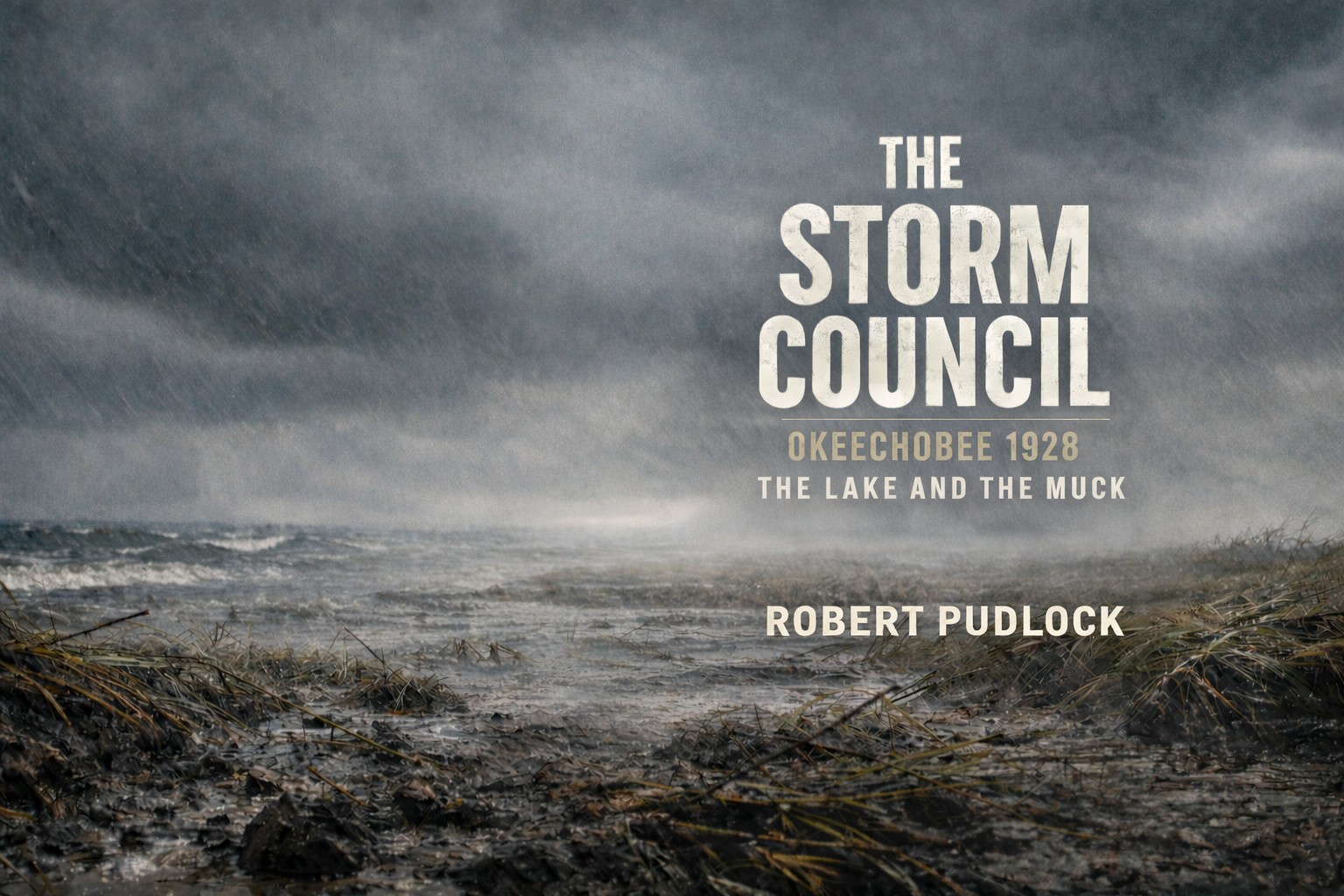
The Okeechobee Hurricane of 1928
The third Storm Council volume reconstructs the storm and its inland target. The Observer tracks the approach and the lake’s failure. The Analyst reads the dike engineering, the agricultural labor system, and the inequitable distribution of exposure and warning. The Council Elder files the entry on what engineered confidence costs when the engineering was never designed for the actual threat.
Built from primary sources including Weather Bureau records, Army Corps of Engineers documentation, survivor testimony, and the incomplete official death toll records.
READ THE OPENING
The dike had been built to hold the lake back from the fields. It had held before. It had held through storms the older workers remembered. What it had not held through was this — and by the time the south wall gave way, there was no road that the water had not already taken.
HARDCOVER · PAPERBACK · KINDLE · AUDIOBOOK
THE RECORD CONTINUES
Seven years later. One road out. The Council was watching the corridor.