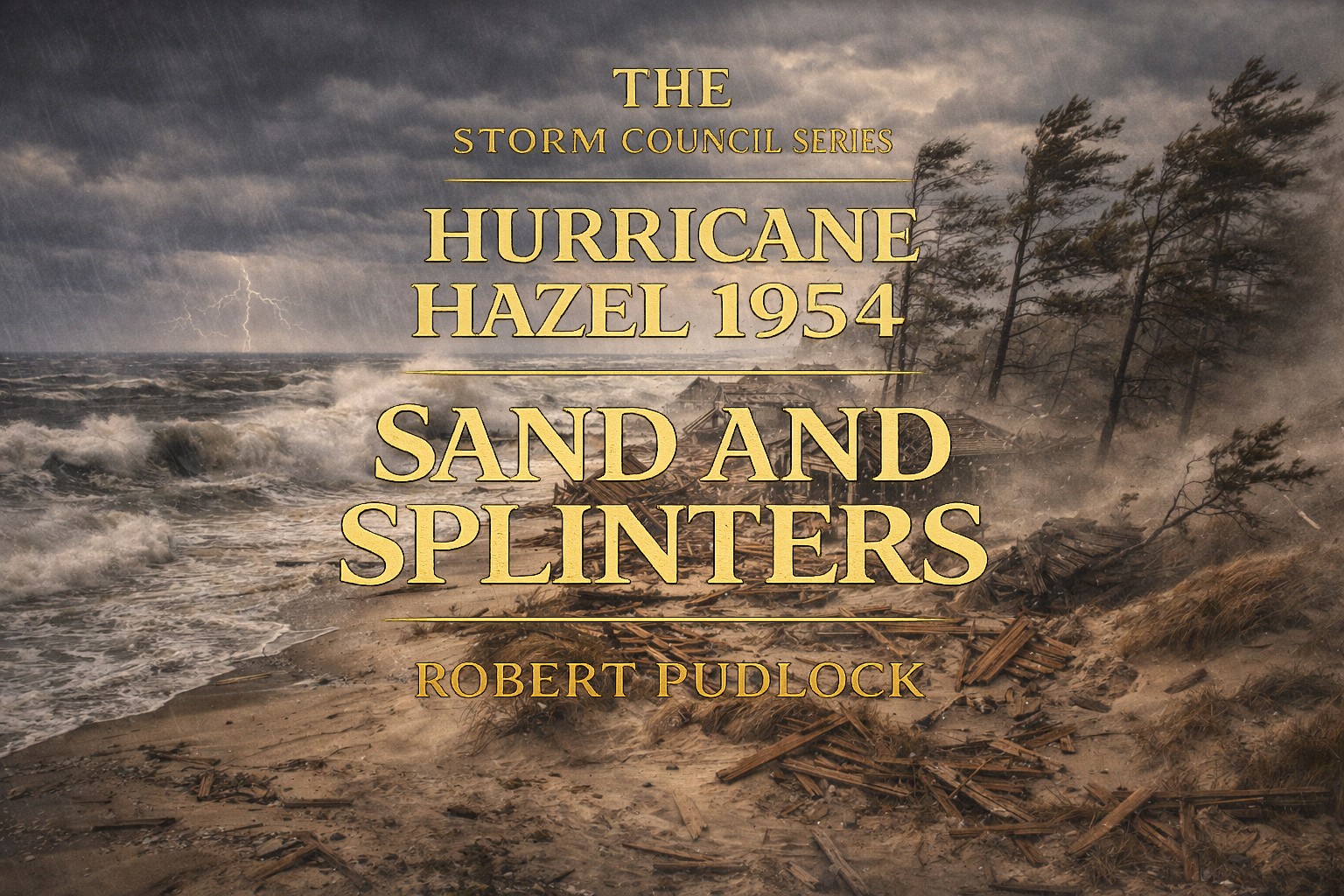
The Observer tracked a storm that refused the expected path—a thousand miles of coastline, from the Carolinas through the mid-Atlantic. The Archivist noted the pattern: the coast had been building as if the next storm would behave like the last one. The Council filed it under Exploit Human Pattern. It usually does.
THE RECORD · ENTRY SEVEN
Hazel 1954
The Border Crosser
THE OBSERVER
The Observer tracked Hazel’s persistence with clinical attention. Landfall in North Carolina: winds near a hundred and fifty miles per hour. Storm surge of eighteen feet. But then something the instruments rarely recorded—the system did not weaken. It maintained near-hurricane force through the Carolinas, into the Mid-Atlantic, into Canada. The Observer had tracked hurricanes that struck the coast and died. Hazel struck the coast and kept moving. A thousand miles of sustained destruction. Over a thousand dead. The Observer noted: this was not a storm that should have existed in its final form. Yet it did.
WHAT THE COUNCIL FOUND
The Analyst found vulnerability concentrated in precisely the places Americans believed themselves safest. Floodplain communities hundreds of miles from the ocean had built for local rain events, not tropical cyclones. Interior infrastructure was designed with the assumption that hurricane force could not reach it. The Analyst read a nation’s false certainty shattering across a thousand miles of geography. Communities in five states and into Canada experienced effects that conventional meteorological thinking had rendered impossible. The deaths occurred not from storm surge alone but from wind, falling trees, structural failures, and flooding far inland. The Analyst observed: Americans had constructed a false narrative of geographic safety. Hazel destroyed that narrative in a single afternoon.
THE RECORD FILES
“The Council had catalogued coastal vulnerability for half a century. Hazel forced a new entry in the Record: inland vulnerability could dwarf coastal vulnerability. The Elder understood the implication immediately. The map of American hurricane risk had been drawn wrong. Hazel redrew it. The federal government’s engagement with floodplain management as a national priority began here. The Elder notes: the storms that teach the most are the ones that violate the assumptions humans trust the deepest.”
THE PUBLISHED ENTRY
Hurricane Hazel 1954: The Border Crosser
READ THE OPENING
October 15, 1954. A hurricane made landfall in North Carolina with winds near 150 miles per hour, storm surge of 18 feet, and an extraordinary characteristic: it did not weaken as it moved inland. Instead of tracking itself into extinction, Hazel maintained near-hurricane-force winds through the Carolinas, into the Mid-Atlantic, and into Canada. The death toll exceeded 1,000. The storm exposed a critical vulnerability in how Americans understood hurricane risk.
HARDCOVER · PAPERBACK · KINDLE · AUDIOBOOK
The Record continues. Hazel proved that no latitude is safe. The next entry moves to the Louisiana coast—where a warning system failed when it was needed most.
Volume 7 of The Storm Council · 44-Storm Canon · the record Continues